
Interactive Melodies 002
Special Issue

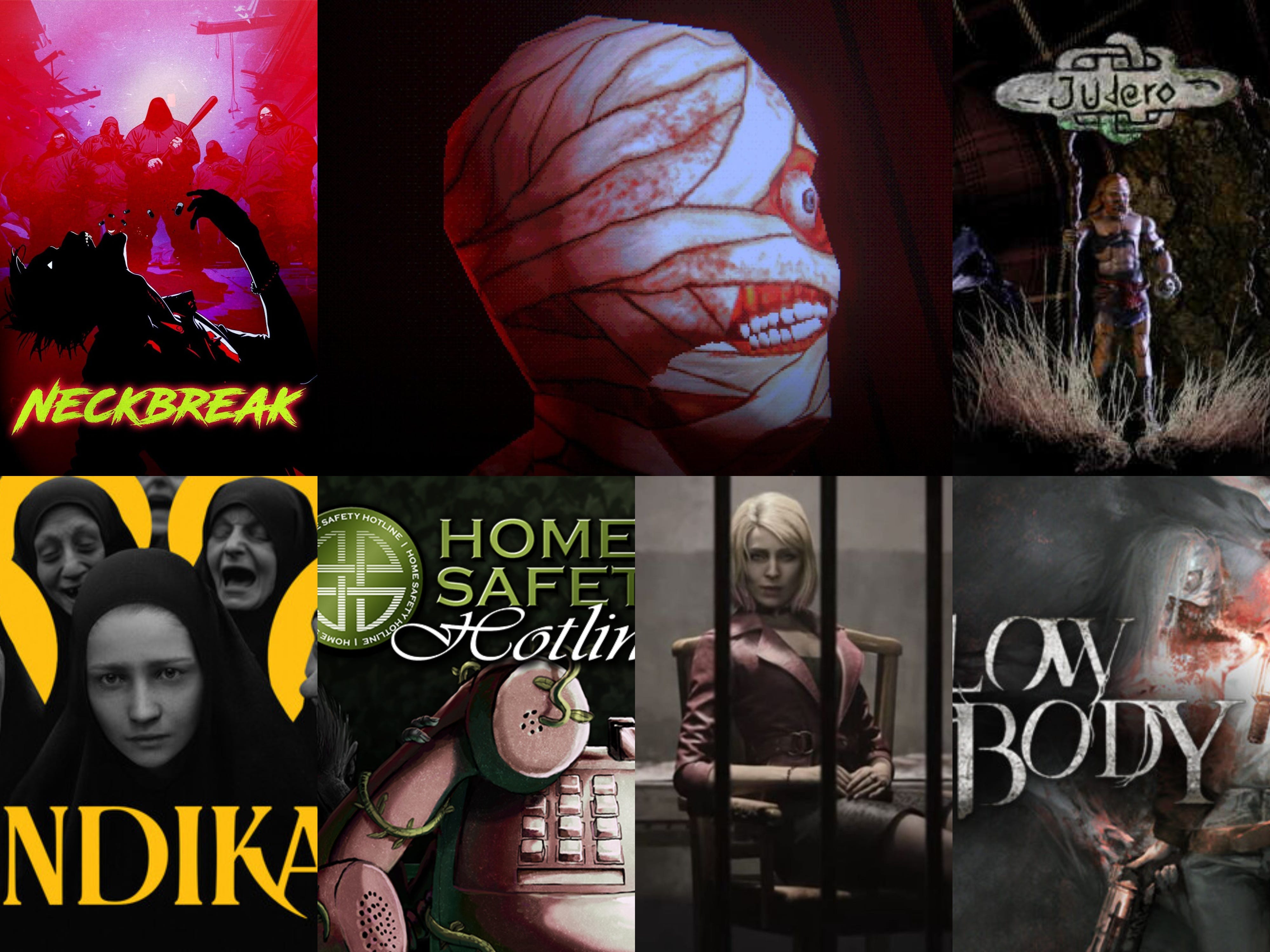
Silent Hill 2 (PS5) – Bloober Team’s titles were always hit or miss for me. Their horrific rollercoasters fully employ spatial narrative potentials and visual effects to great results (Observer, Layer of Fear 2) but function because they offer little gameplay and exploration. Unfortunately, it’s always a linear affair that often crashes the ending (The Medium). I wanted Silent Hill 2 to succeed, having a strong attachment to the series. It works for the most part, but alas, it stutters mid-game and is afflicted by the usual Bloober issues.
The game starts strong, offering a surprising rehaul of the Bellmer-ian entities haunting the town. Combat is smooth but not too much and is more crunchy and visceral than gory. Initial exploration suggests that the spatial scope of the remake is more ambitious, which, for Silent Hill aficionados, would mean more cryptic lore to discover. Graphic and audio updates are also welcome, especially for the dynamic fog. But this Silent Hill 2 is twice as long as the original, and the experience falters, reaching the original 10 hours in length. Combat becomes repetitive, and the game has only a few tricks up its sleeves and quickly abuses them. All the locations are more extensive, with new puzzles but no new occult mythos to discover. Not only do their structures hide some very basic linearity, but after Toluca Prison, they offer little in spatial storytelling.
A great final act would have salvaged these design issues. Unfortunately, in true Bloober fashion, the last section felt rushed, whatever the ending you get. I still hope a remake of the first Silent Hill is in the works, a game that deserves a revisit. But this return to Silent Hill 2 overstays its welcome.
Hollowbody (Steam) – Headware Games parallel Bloober Team in progression after only two titles. Following Chasing Static, a “classic” first-person horror game based on linearity and audio files hide and seek, Hollowbody is a love letter to 3rd person survival horror with combat that’s mostly working but feels like an afterthought. It may seem unfair to compare a small team’s game to a AAA production. Still, I wholeheartedly favor Hollowbody to Silent Hill 2 Remake in terms of ambition and creativity. The dystopic cyberpunk take on the survival horror formula offers a singular experience of future shock and hauntology, a massive haunted house of anthropocentrism failures and technocorruption. Sound design is brilliant, and the game doesn’t shy away from exploring abstract body horror and confusing, in a good way, worldbuilding.
Indika (PS5) – Polish avant-garde cinema, Piotr Szulkin comes to mind, set in Russia and transposed as a video game. Or Makavejev: The Arcade Game. An ode to blasphemy and corruption. You never played anything like this.
Mouthwashing (Steamdeck) – How Fish is Made and The Last One and then Another confirmed Wrong Organ status as creators of unique philosophical experiences, proposing existential dread and a joyous nihilism through interaction. Mouthwashing catastrophic sci-fi sitcom toys with humor and horror but quickly veers towards an exploration of humanity that would make Sartre squirm. It’s also a masterclass in editing as a game design approach, with great use of data moshing!
Judero (Steamdeck) – I’m a die-hard fan of King-Spooner games. The mix of handcrafting, video techniques, transparency, sensibility, and vulnerability transcends video games as a medium. They are profound experiences that refuse binarities and embrace the world's complexity. King-Spooner here collaborates with Talha Kaya for Judero, a “stop-motion videogame” taking Scottish folklore as a launch pad for a Zelda-esque adventure of surrealist encounters, mouth-agape humor, and brilliant music. This is game design as an act of love.
Home Safety Hotline (Steamdeck) – Analogue horror meets the drudgery of call centers. The team must have had a blast recording the calls and writing the entries in the employee guide. HSH toys with expectations and boredom to great effect, whereas horror is not necessarily what we initially think.
Neckbreak (Switch) – First-person Hotline Miami overdosing on inspirations and references. This game is massive in its implications and variations, bordering on Deus Ex complexity, but the pill-popping frenzy often breaks apart in its intensity. It garnered a cult following that’s as fascinating as the world the game is throwing at the player in corrupted pieces. This is the prescription if you want your interactive violence to hit differently.